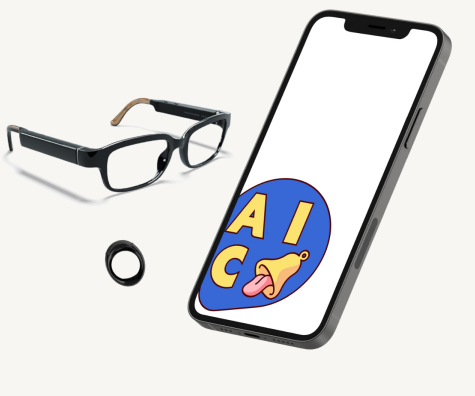
AICA, a speculative design project imagines the use of AI to suggest to a person what to say next during a verbal conversation.

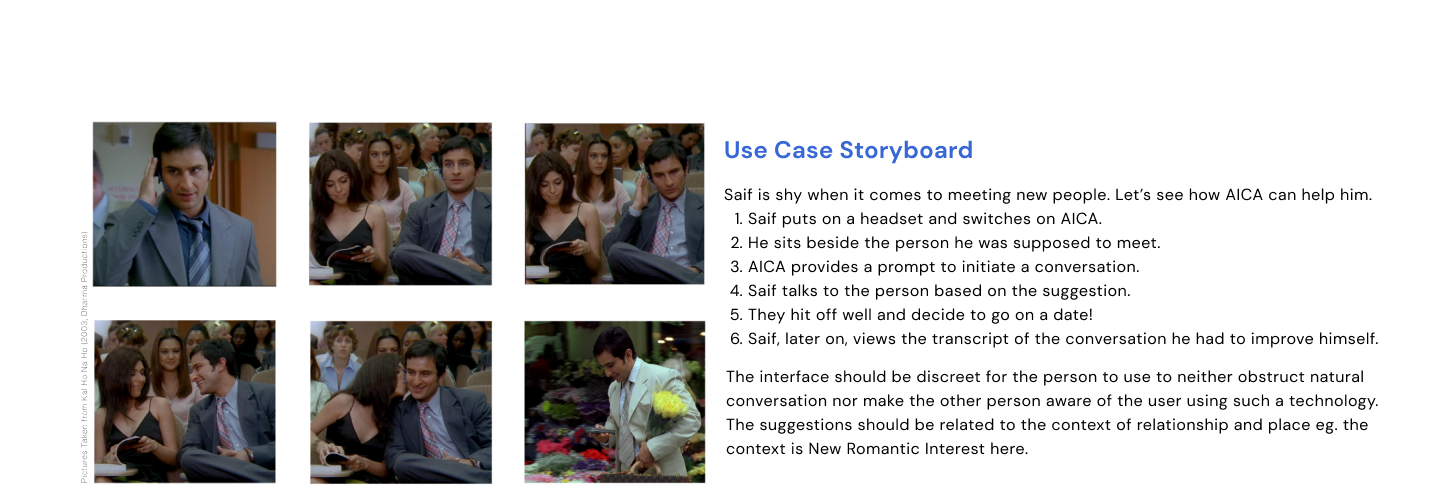
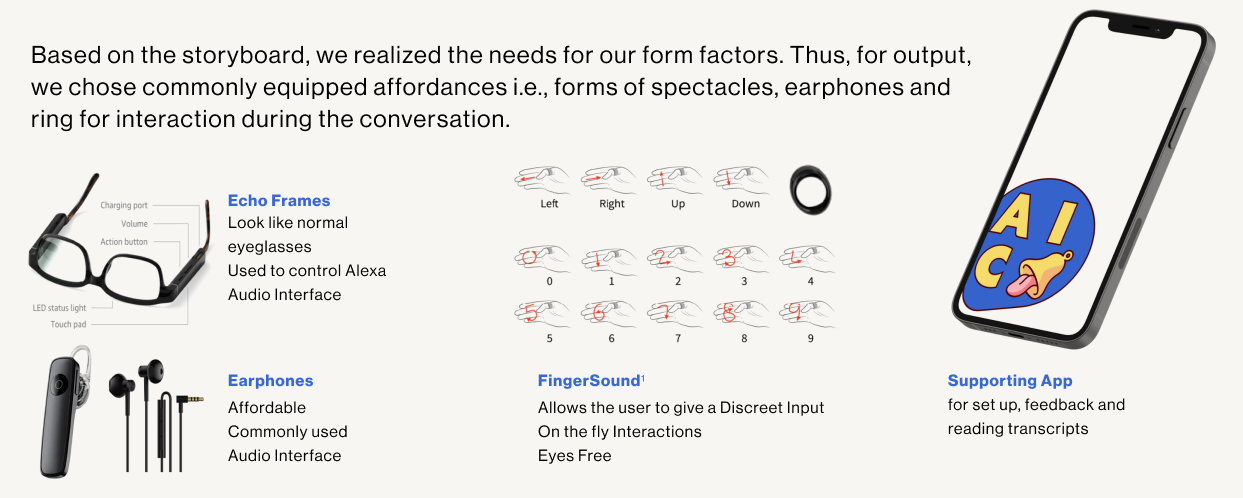
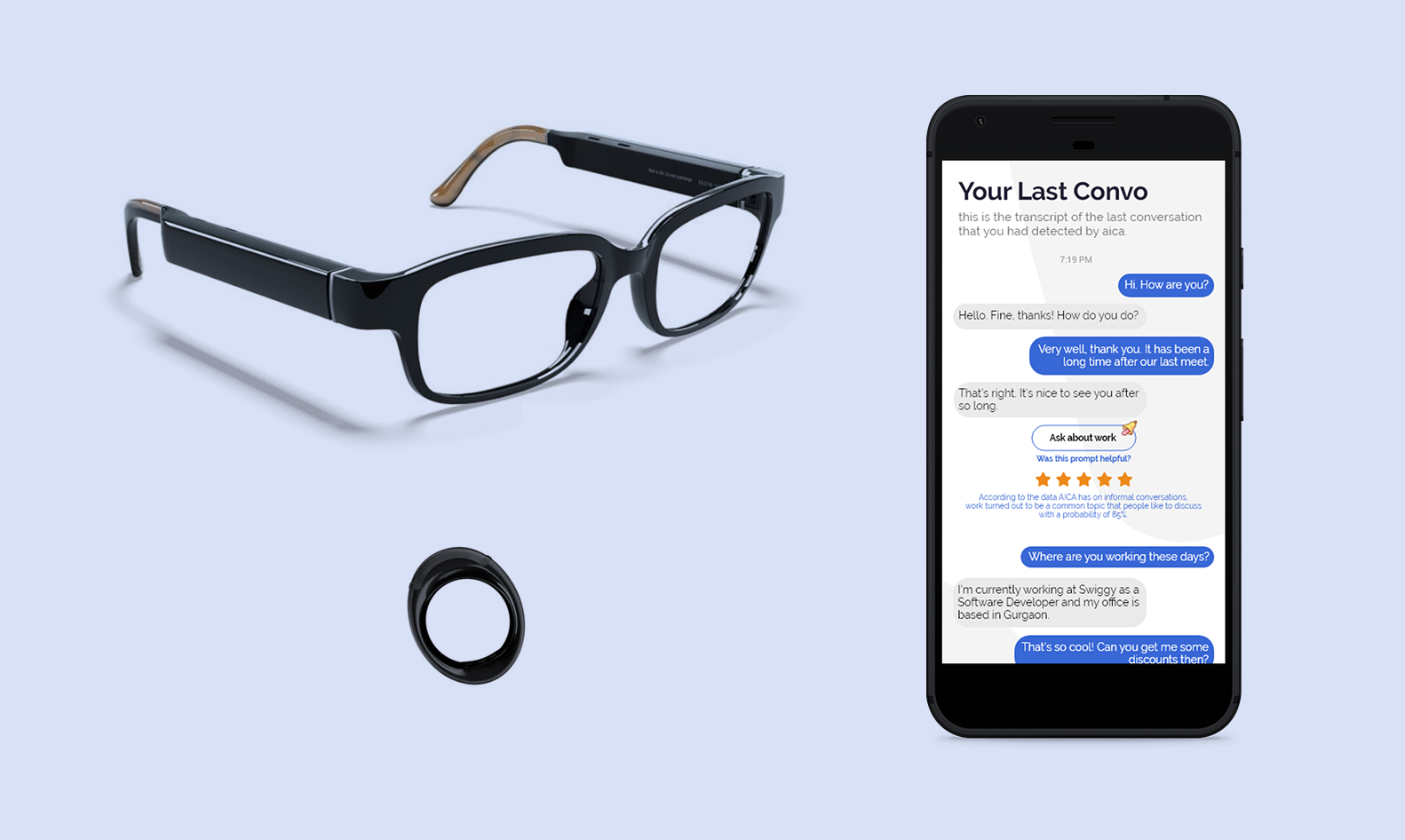
It consists of a ring and a pair of spectacles which provide discreet input and output capabilities mid-conversation along with an app for overall control over the system.

To design such a human-technology symbiosis, we employed a three-pronged approach
to strike a balance between all the entities in the conversation: the user, the AI and the person being talked to.

//AICA//
An Artificial Intelligence Conversation Assistant

Navigating emerging tech requires balancing innovation and usability. As the sole designer in a team of engineers, my focus was crafting a user-centric detail-oriented solution for cutting-edge AI. Guided by Google's People + AI guidebook, I emphasized aligning tech advancements with user-friendly design principles.

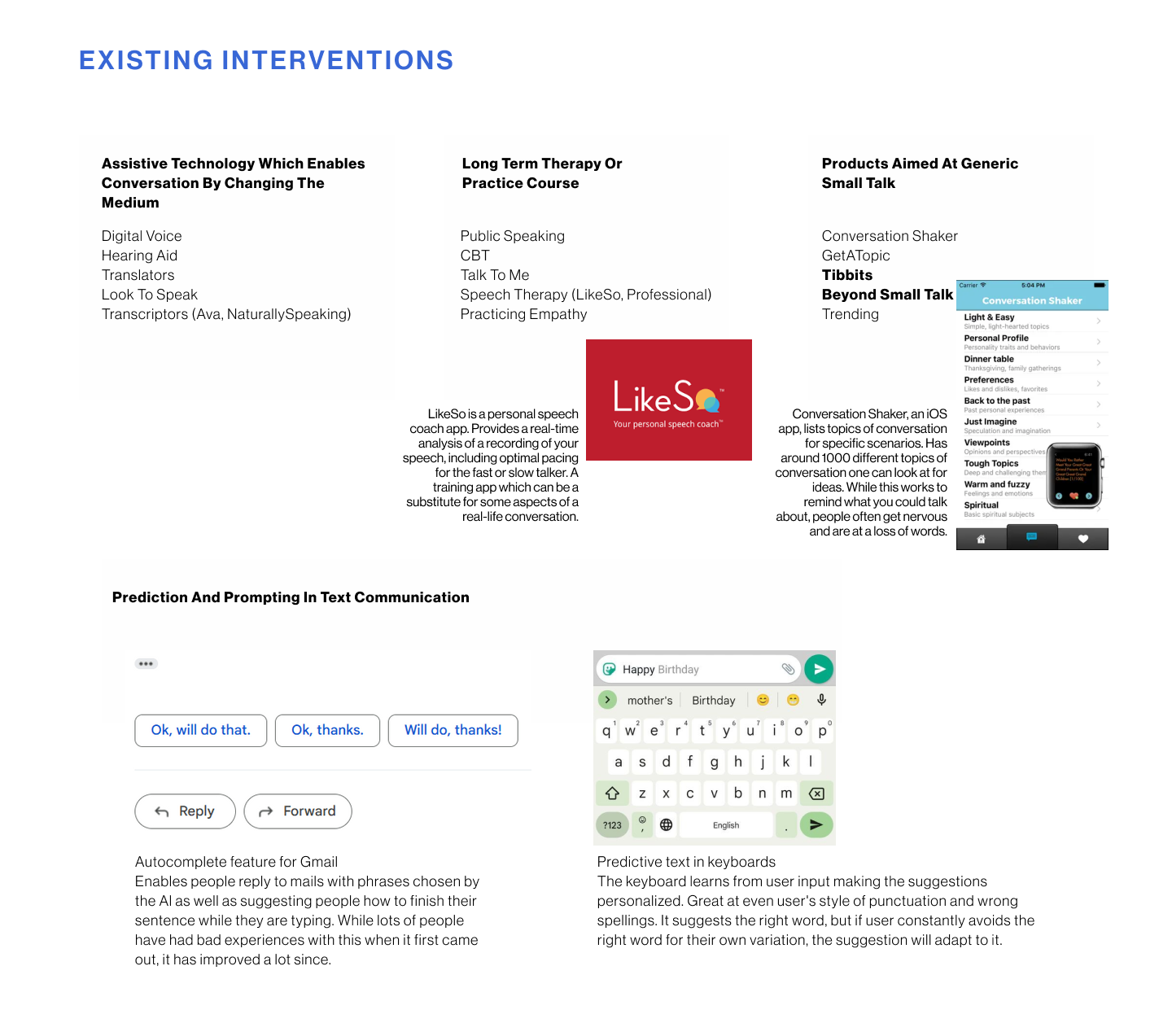
So where is the gap?

Real Time Support While Speaking

Why AI?

- easier, faster than conventional routes of overcoming barriers
- core experience requires recommending different content to different users: contextual, need dynamic data on speakers from various languages and regions
- immune to human emotions like fear and anxiety
- grasp content irrespective of speaking rate


Why not AI?

- subpar quality of suggestions
- missing of non-verbal cues
- tediously relying on AI solution may affect cognitive abilities
- If multiple people use this, AI might be the only thing driving the conversation

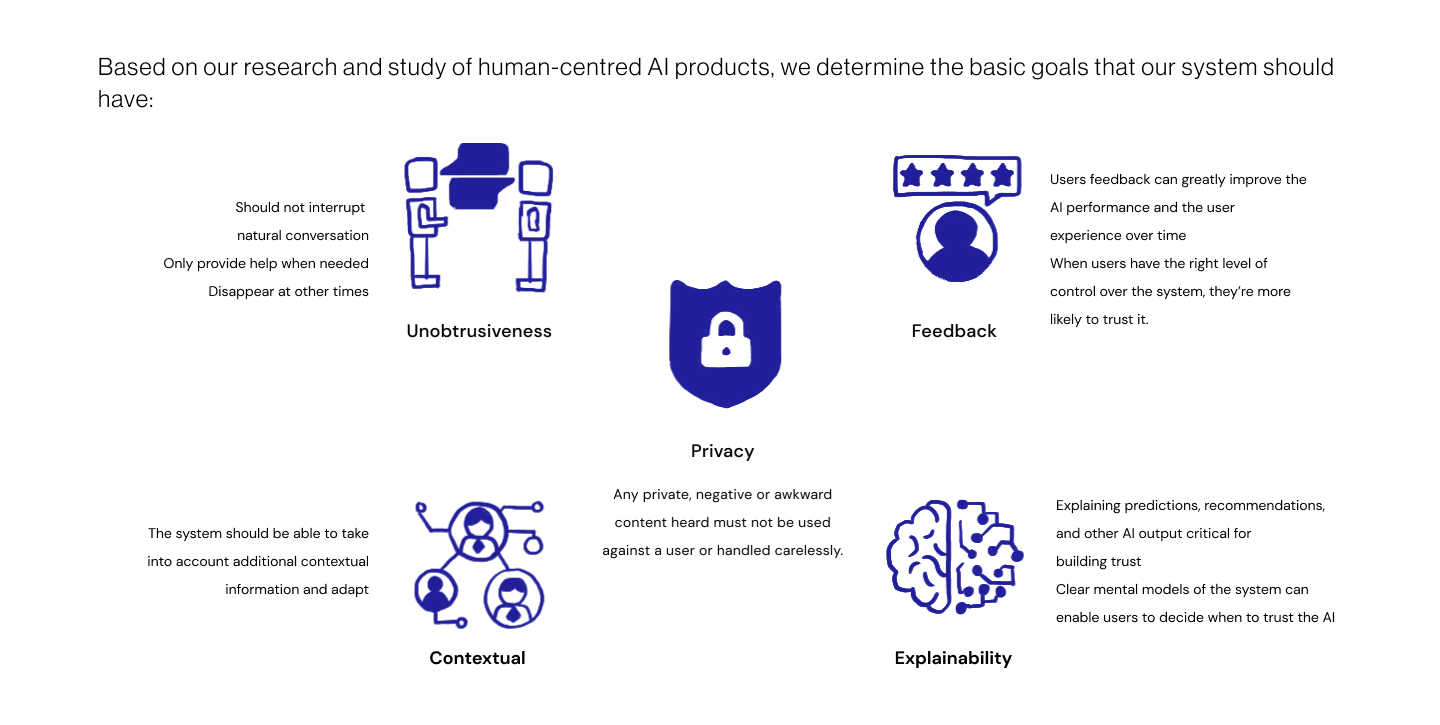
Design goals of the AI system
🧑🧑

AI and many complex technologies seem like a black box to the common user. The AI needs to adapt to their existing mental models as well as communicate effectively so that their expectations and use forms accordingly.
We took guidance from Google's People + AI Guidebook to design our AI system.

We propose an AI system,
AICA that will provide suggestions or prompt a user about what to say next in an in-person human conversation as seamlessly as possible.

Architecture ⚒📐

While this idea is speculative, given that the field of Natural-language generation is still maturing,
we have tried to ground our exploration in existing devices and research as this technology can be viewed much closer to the present.

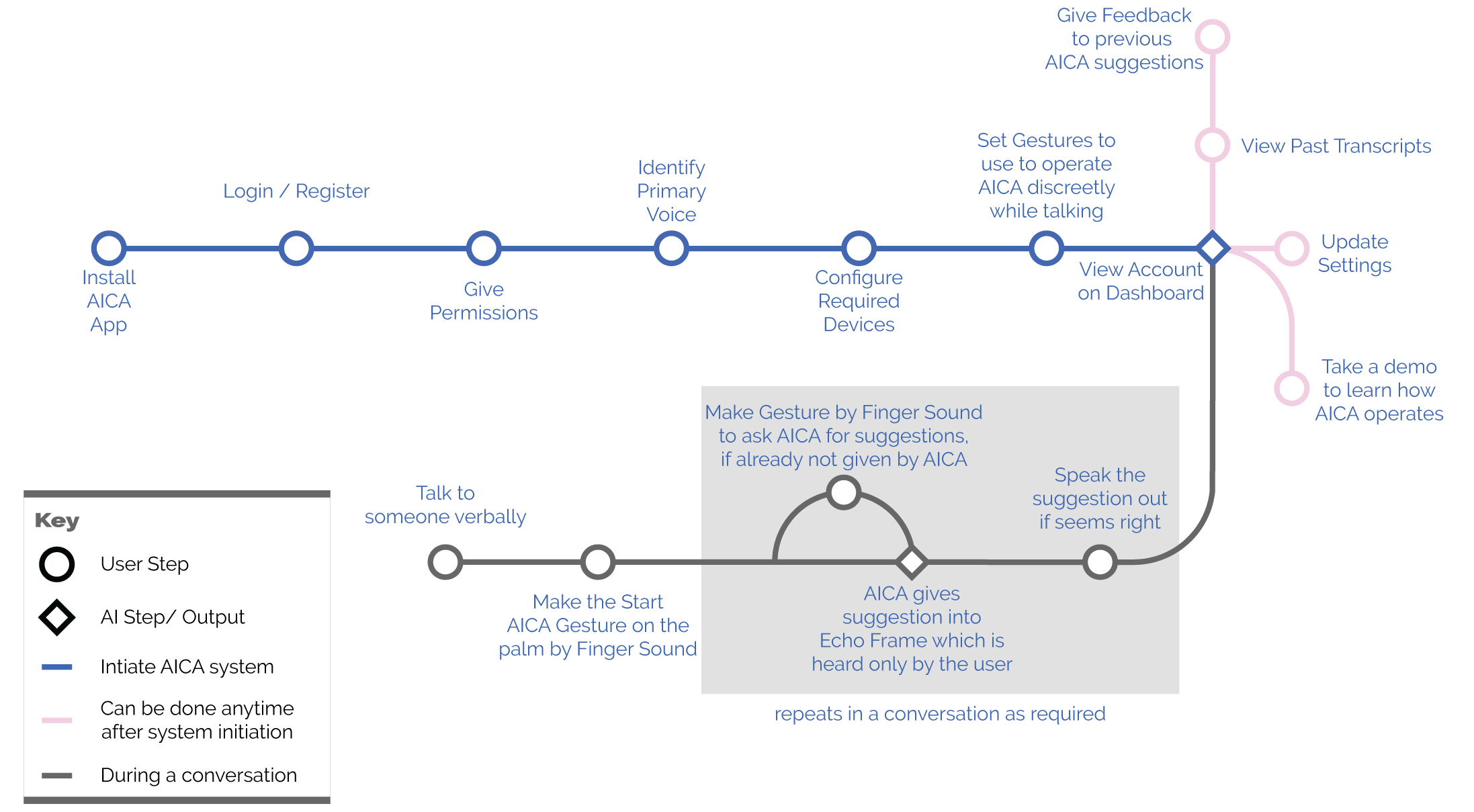
      System Flow


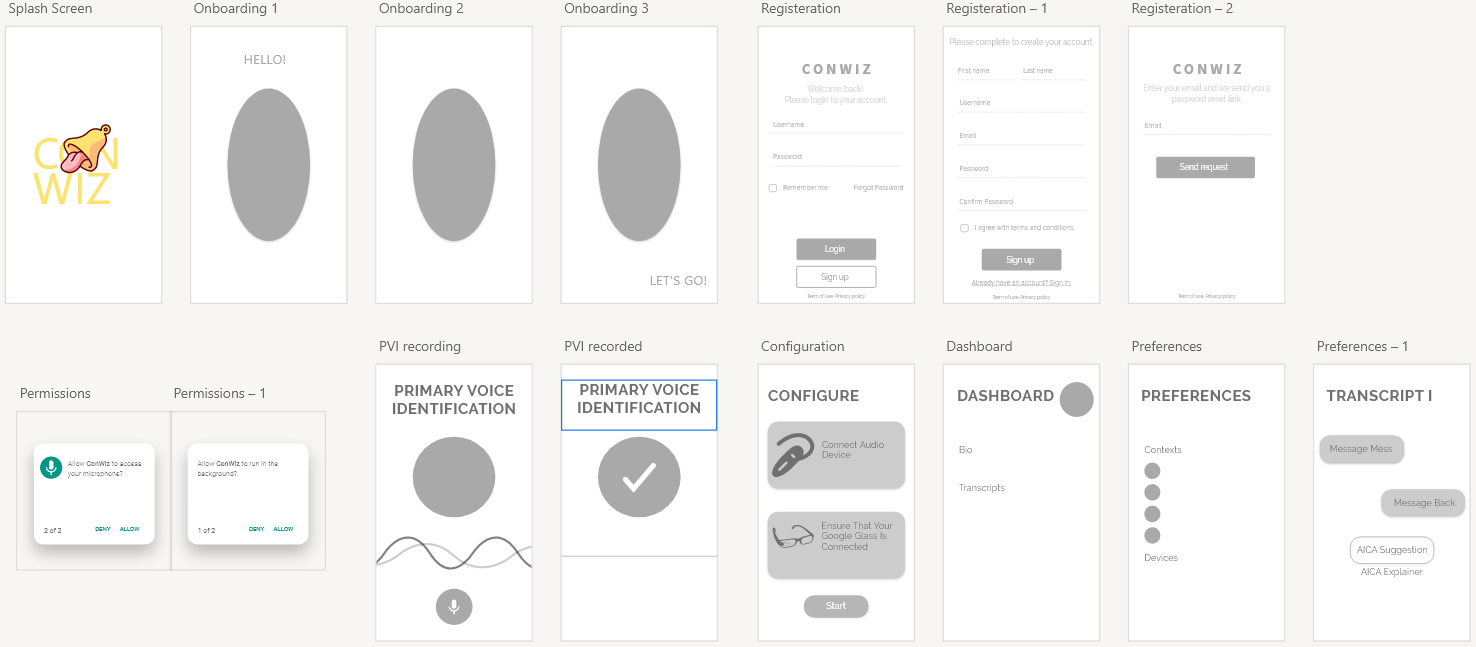
Wireframing

solution 👩🔬

Multimodal AI prompt system, AICA to prompt the user in a face-to-face conversation as seamlessly as possible.

Easy Onboarding

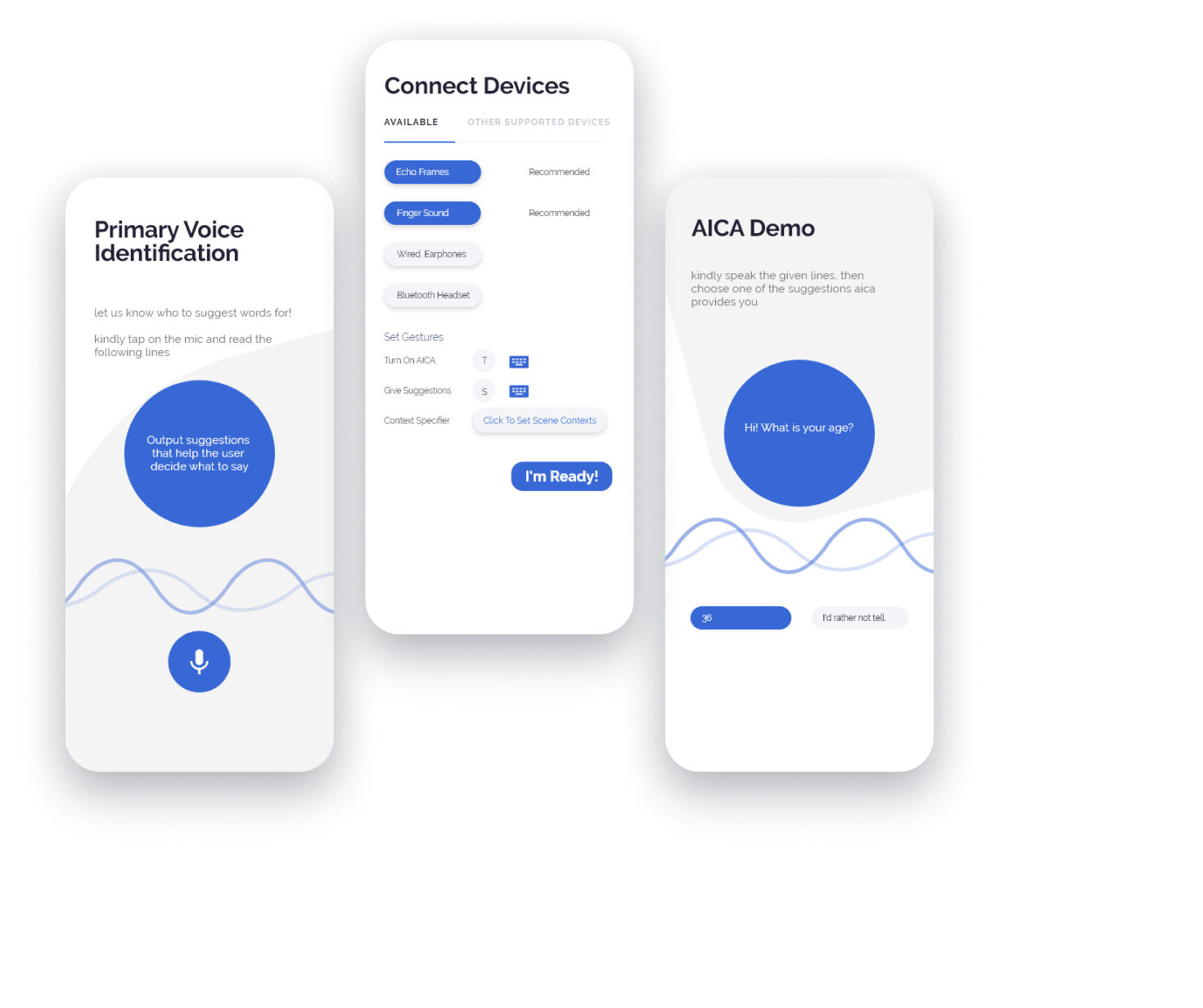
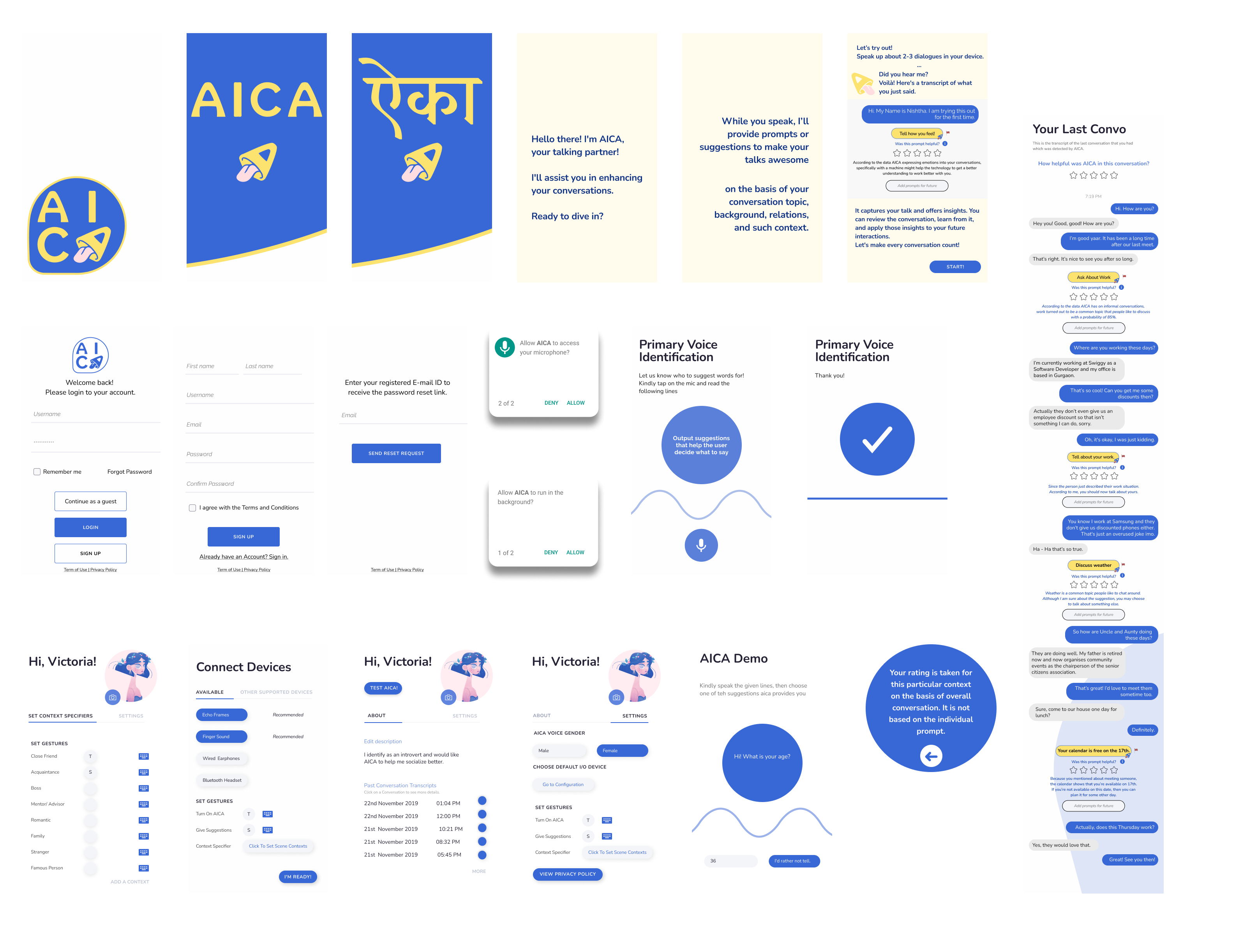
AICA smoothly helps the user set up common contexts, voices and connect devices. It also has a demo for the user to try and get used to the system.

Contextual

AICA suggests prompts according to what context the user is in.

On the Fly Interactions

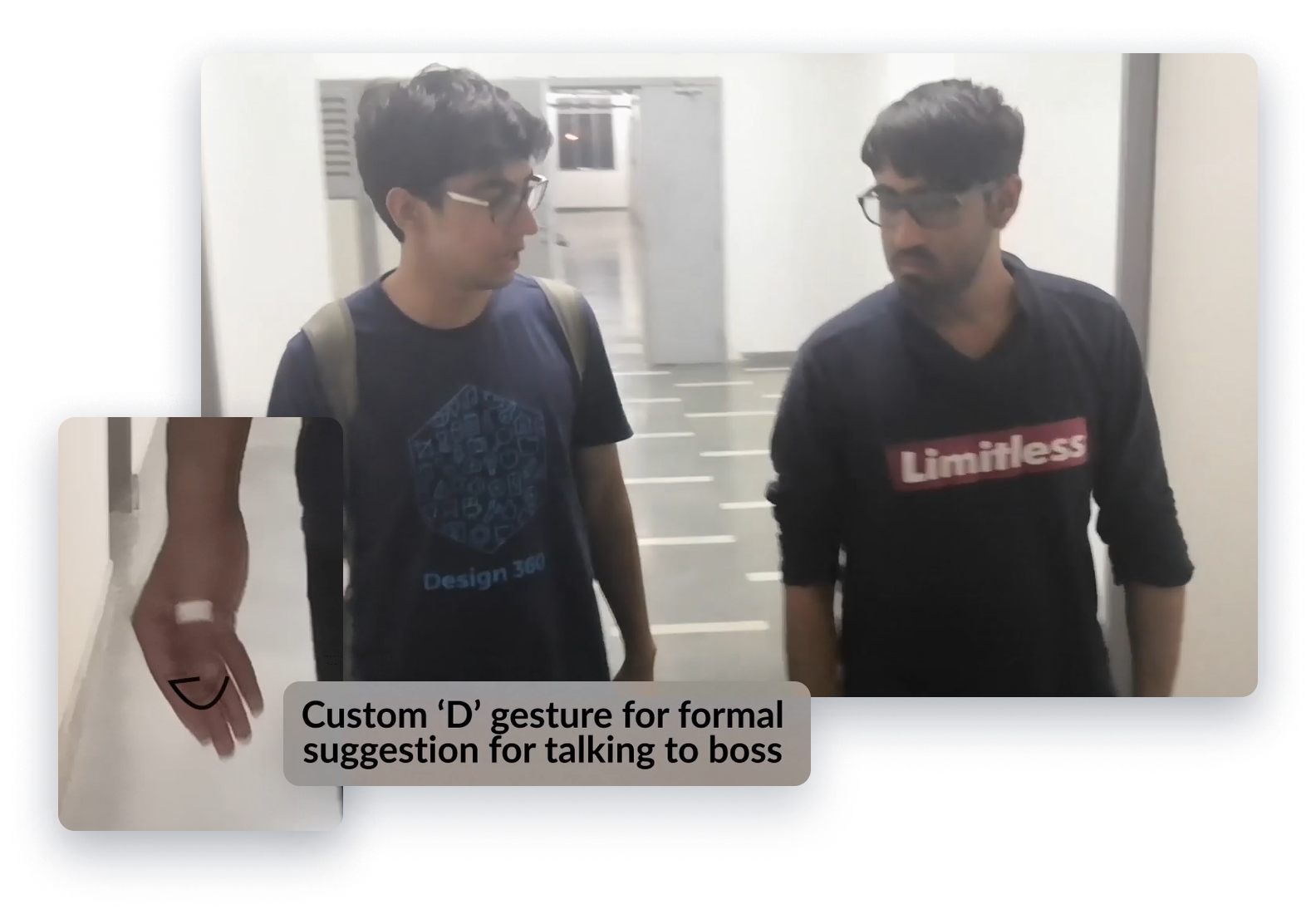
Discreet on-the-fly control over the system prompts while talking or doing any task.

Explainability

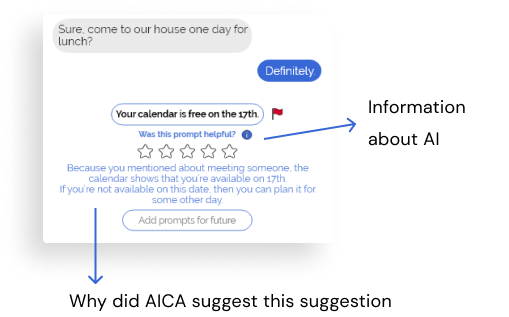
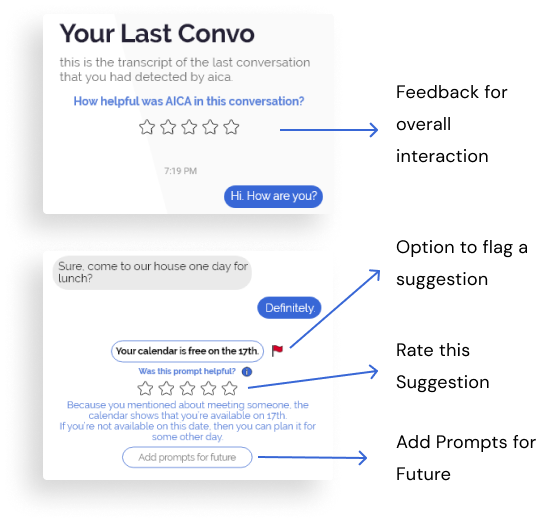
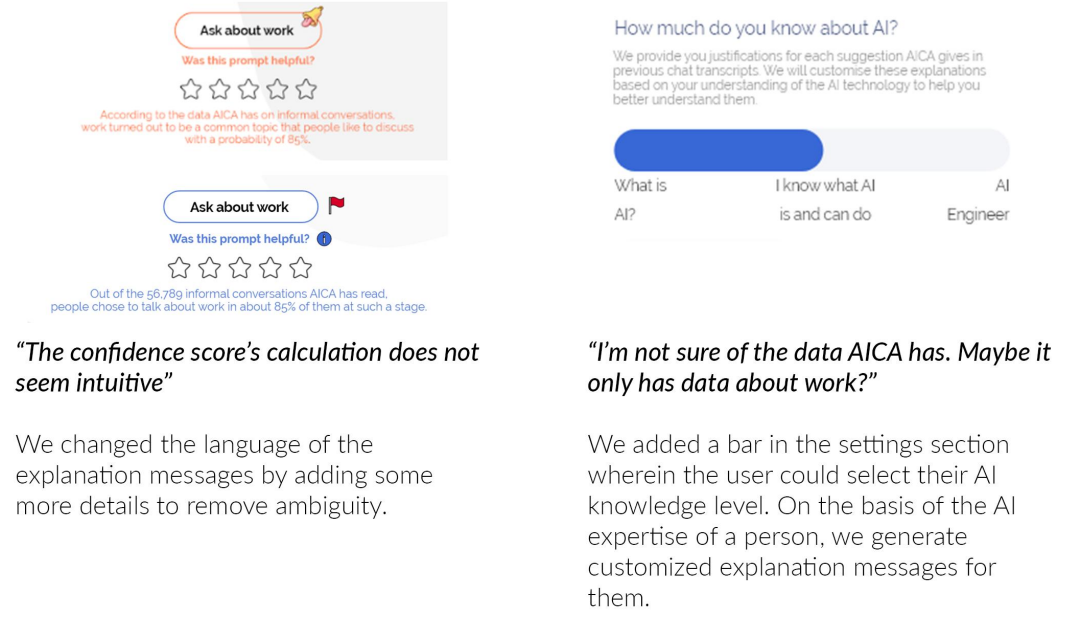
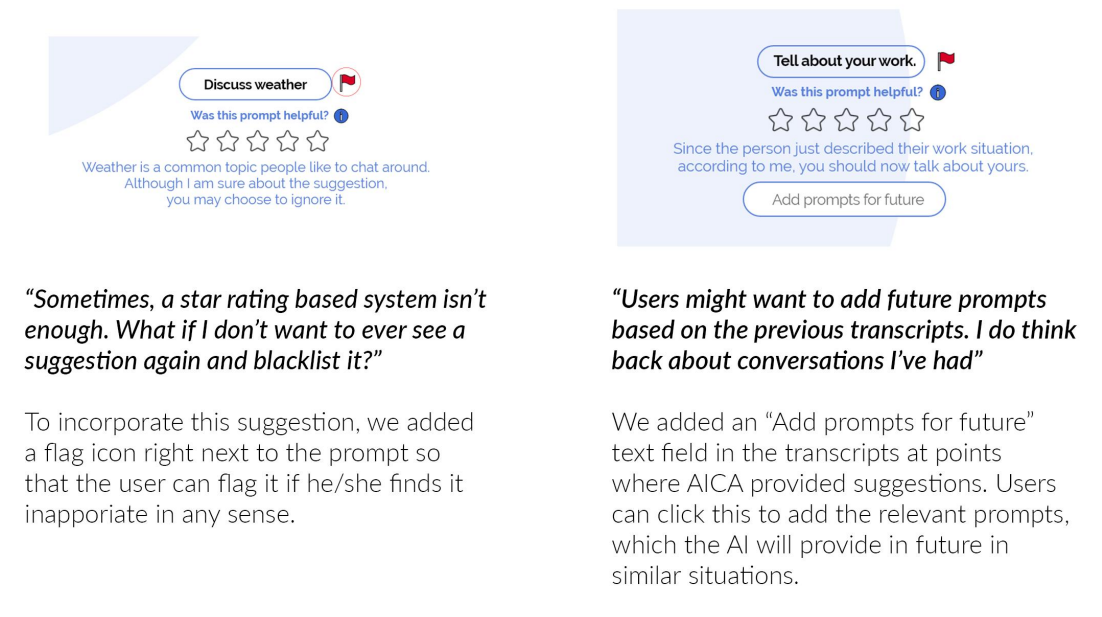
Delayed explanations of the reason of suggestions. AICA provides the user with a transcript of their conversation, and they can see where exactly each suggestion was made. Below that suggestion, we briefly describe how that suggestion came to be.

Feedback

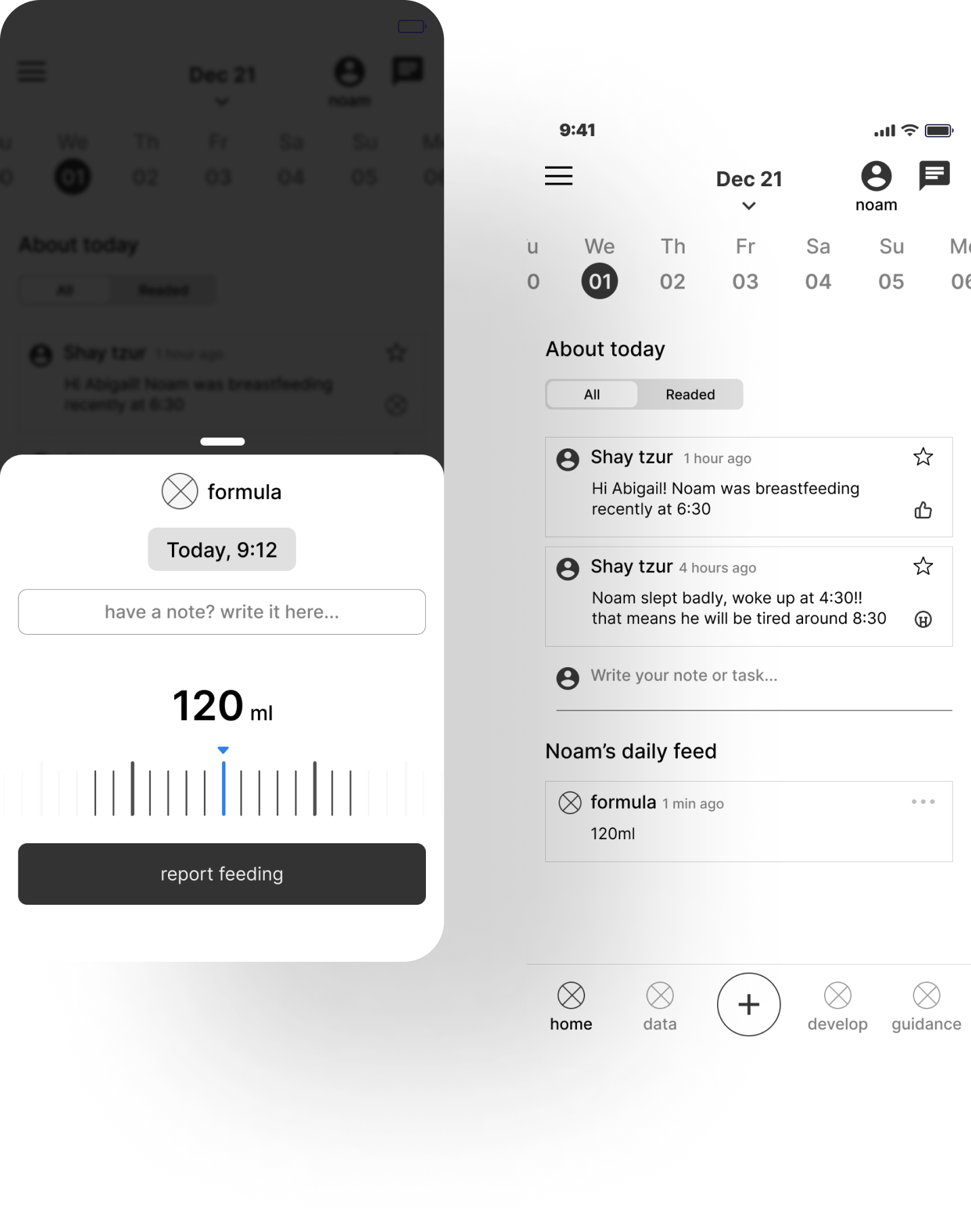
On the nanny's home page she will see all the messages left for her and enter the information about the toddler's agenda.

Errors + Graceful Failure

When the app cannot connect to the server (network error), it would let the user know by playing a distinct sound. This will allow them to be prepared for a lack of suggestion by the app. Active user feedback collection to reduce AI errors in long run.

Privacy

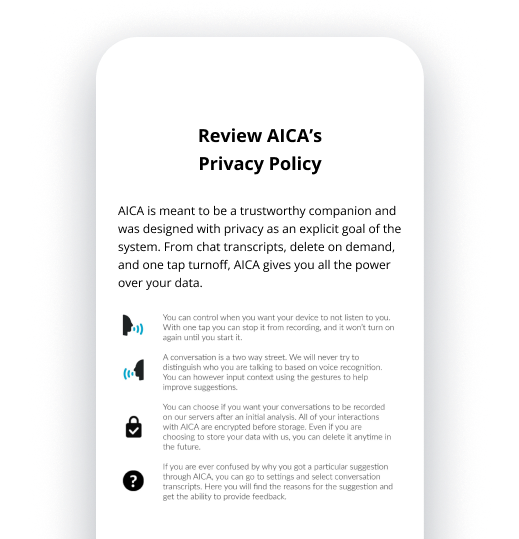
AICA is meant to be a trustworthy companion and was designed with privacy as an explicit goal of the system. From chat transcripts, delete on demand, and one tap turnoff, AICA gives you all the power over your data.

Mockup Screens

View Prototype

solution

Native app for management
and optimization communication
between parents and their toddler nanny

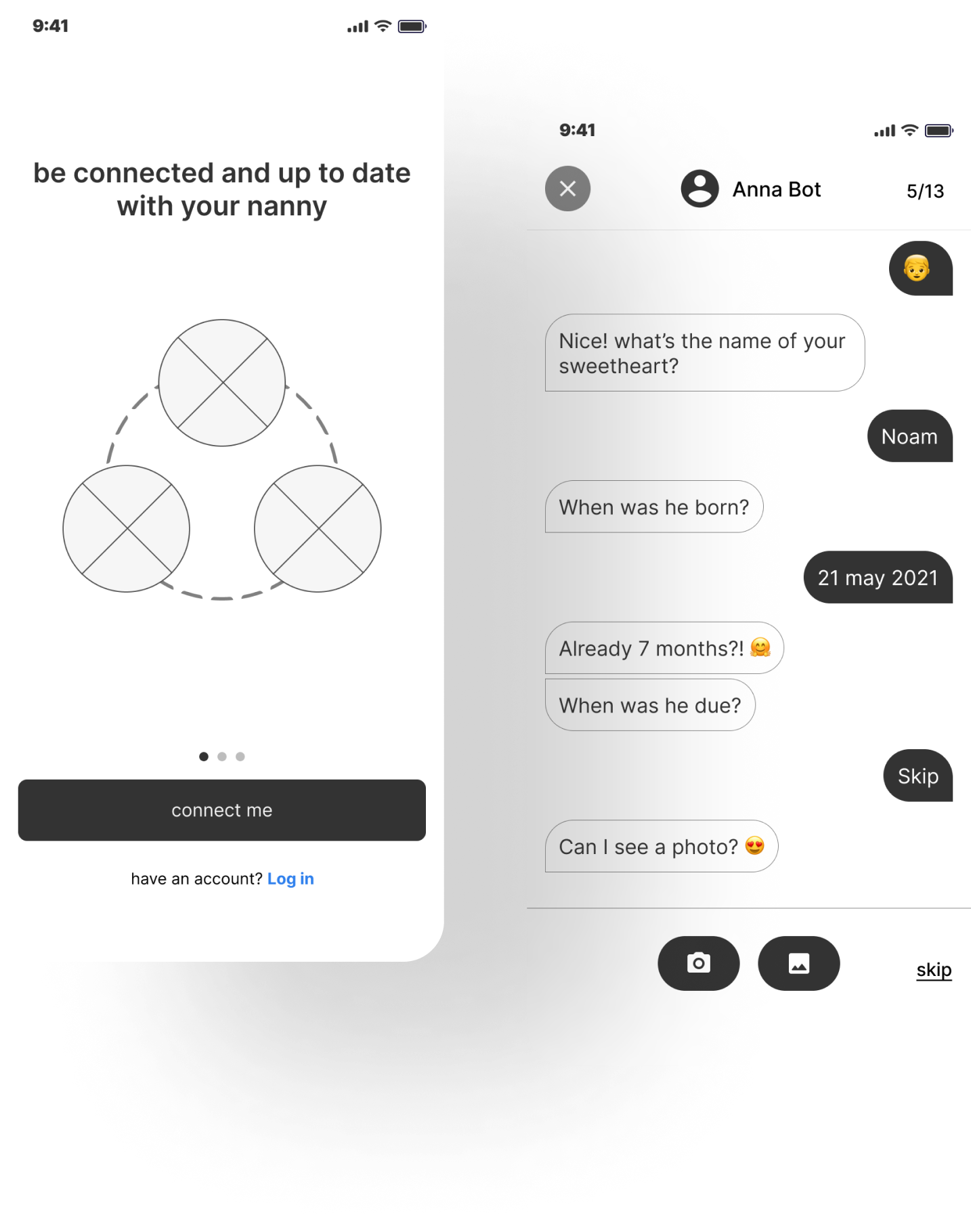
Parents Onboarding

After the parent has logged in through one of his social media profiles the app forwards him to chat with a bot that will take the information about the toddler.

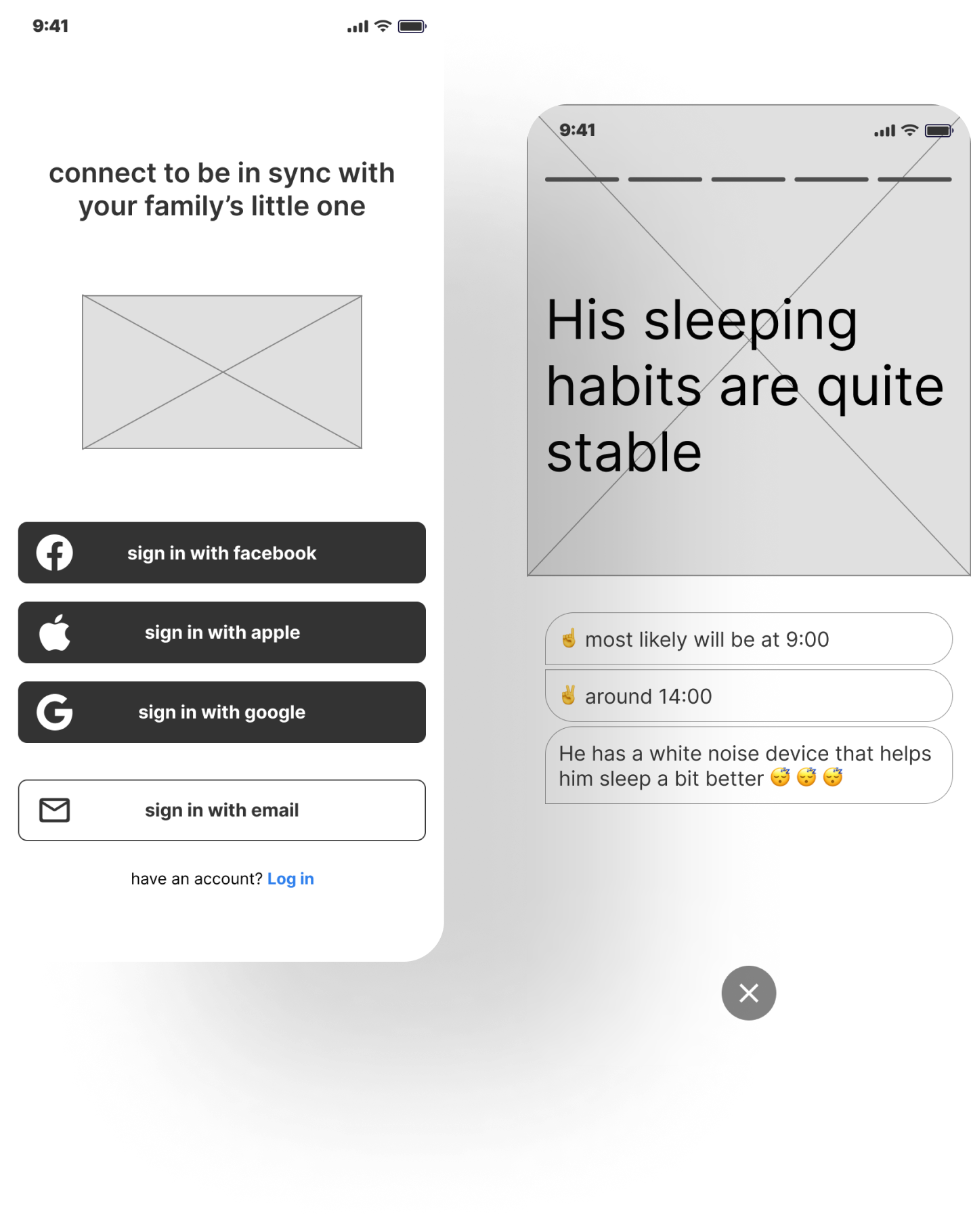
Nanny’s Onboarding

All the information that was received during the parent's onboarding will be displayed to the nanny.

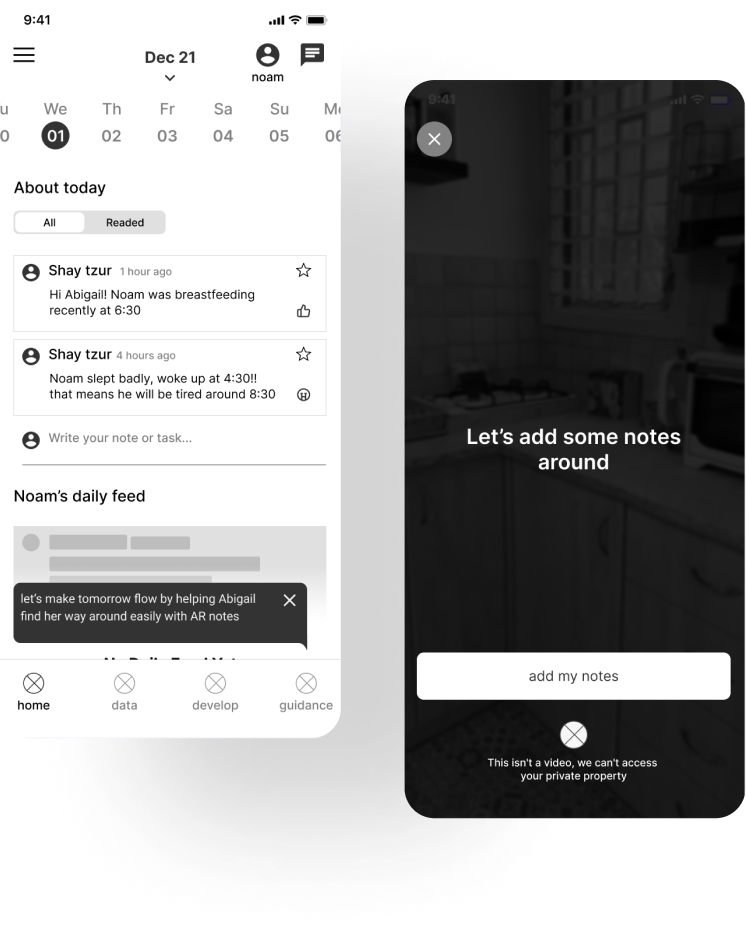
Home Instruction

To decrease unnecessary engagement with explanations to the nanny the app will allow adding AR notes around the house.

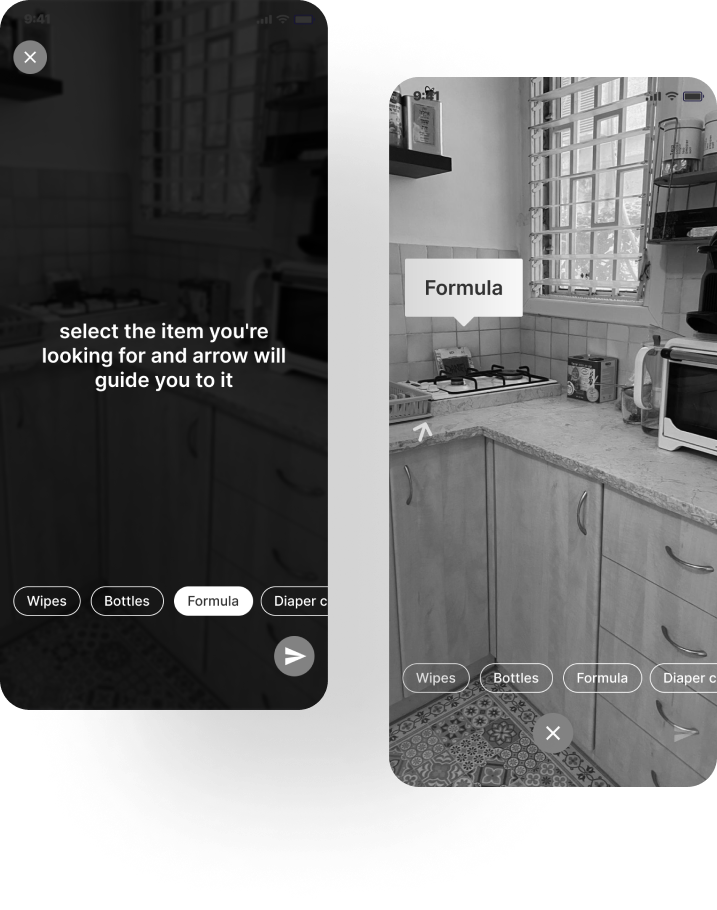
Home Instruction

So that the nanny can easily find what she needs.

Nanny’s Interaction

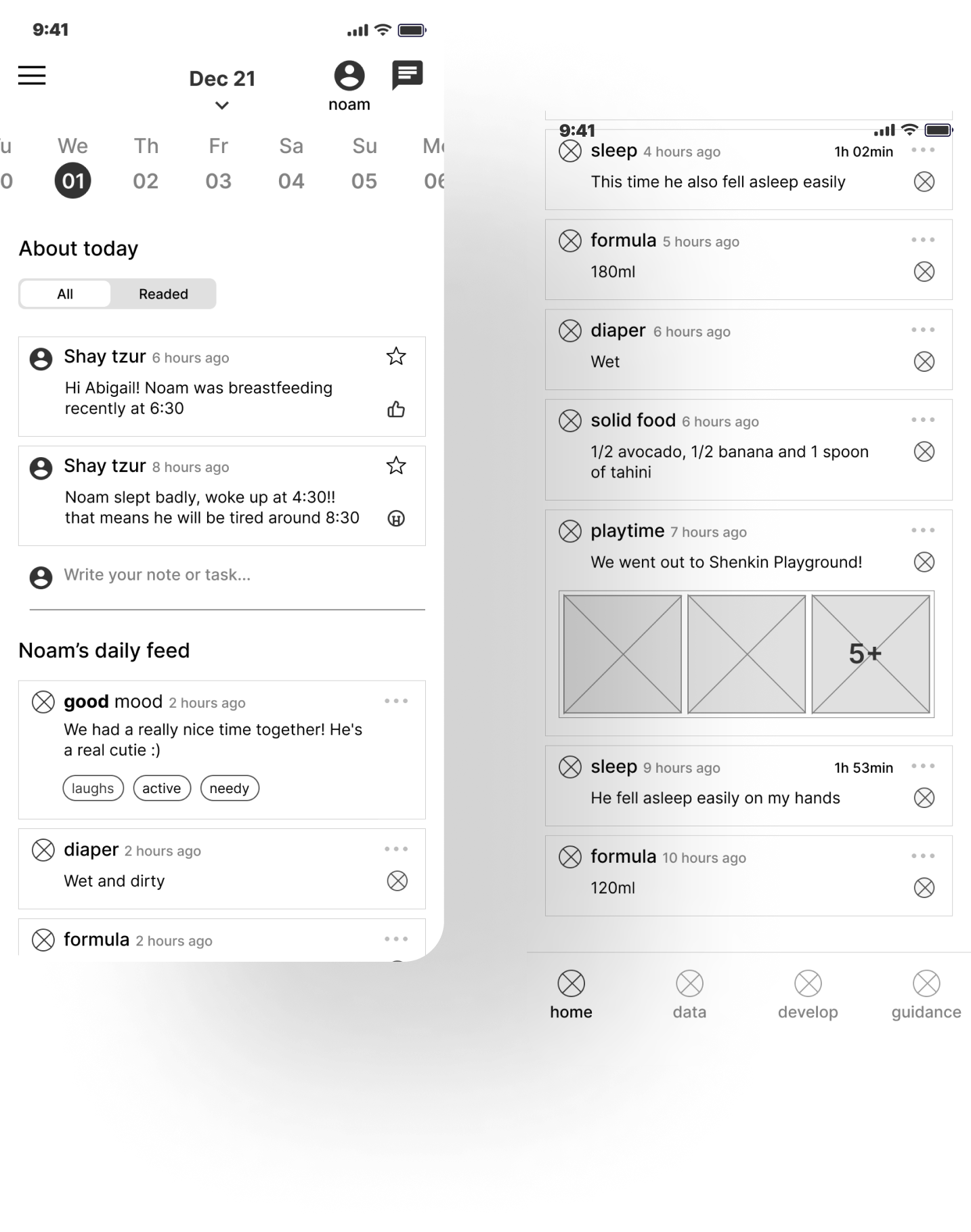
On the nanny's home page she will see all the messages left for her and enter the information about the toddler's agenda.

Parents Interaction

On the parents home page they can see all the info collected during the day in a quick and easy scan.

User Study

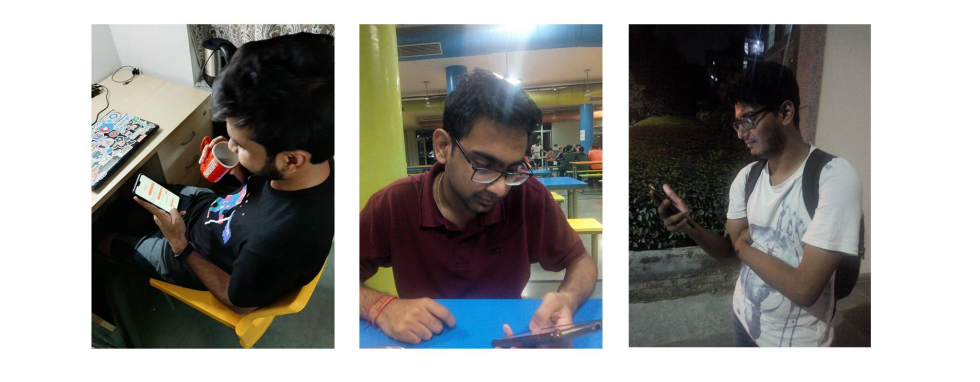
To test out how well the explanations work, we created a scenario conversation and handed our prototype to potential users.

Scenario:
Chance meeting with an Old Friend Having a Short Conversation (Prototyped)
- Simple
- Common
- Relatable

Questions based on PAIR worksheet to test explainability, trust and feedback, like:
- Why do you think you're being asked for this feedback?
- Will you provide feedback here?
- Do you expect your experience to change after you provide a response?
- What other factors, if any, do you think will be used to change your experience over time?
- Is there anything else on which you would have liked to provide feedback?


Feedback

Discussion

While our approach is currently focusing on three entities, solely concentrating on one aspect can have dire consequences.

User Centric Approach
If the system did not mind exploiting the people its user interacts with, it could start making targeted profiles for them. Over time it may learn about the other person so much that it could help the user seem more engaging. It would make incompatible people seem compatible and leave human relationships in disarray. While the user might have control over how their device is collecting data, they may have their conversations recorded through someone else’s device. It could match the user among different conversations and find out who they interact with daily and how much. If Facebook could learn so much through curated posts, this would be much worse.

AI Centric Approach
The world’s biggest tech companies all started with the promise that user data will not be exploited or sold, but they all caved in to benefit shareholders. Governments could easily exploit this through backdoors. Imagine a sedition charge for merely discussing political ideas with friends in private. It might also allow them to track someone through other people’s devices, even if that person is actively trying not to use their personal device.

Reflection

- At AICA, our primary focus was on crafting a human-centered system, offering a landscape rich with challenges and learning opportunities.  
- Ethnographic studies became a pivotal part of our journey, revealing the disparity between user expectations and actual behavior. This underscored the importance of empathy and a user-centric approach in our design process.
- Participant recruitment and avoiding personal biases emerged as notable challenges, prompting us to navigate these hurdles with care and strategic thinking.
- The absence of complete infrastructure during system design taught us the power of imagination and speculation. This led to invaluable insights during the evaluation and use case development phases.
- To ensure a comprehensive evaluation, we engaged a diverse group of individuals, allowing us to incorporate various perspectives into our design considerations.
- Our solution to balance technology and human interactions involved the successful integration of Finger Sound into our design, demonstrating a harmonious marriage of innovation and user experience.
- Teamwork emerged as a critical factor, combining social skills, design acumen, technical expertise, and leadership to collectively achieve our project goals.
- Throughout the project, we maintained a mindset of enjoyment, finding pleasure in facing challenges and embracing the iterative process as an essential part of our journey.

Mentions